|
Fishers is a growing community with a strong history of family values and successful businesses. Located in Southeastern Hamilton County (see interactive map), just 20 miles north and east of downtown Indianapolis, with convenient access to major transportation routes, such as I-465,I-69, I-70, I-74, and I-65,make Fishers a very convenient place to live and do business. The Metropolitan Airport is located in the area and Indianapolis International Airport can be reached in 30 minutes. Cincinnati, Louisville, and Chicago are all within 180 miles of Fishers, and are easily accessed by nearby interstate roadways.
Town Council

Fishers is served by a seven-member Town Council form of government, who serves as the Town's executive and legislative body. The Town Council appoints a Town Manager who oversees the day-to-day operations of the Town. Other elected officials include a
Clerk-Treasurer. The Town of Fishers Municipal Complex is the site of the Town Hall; the Train Station Community Building, including the Chamber of Commerce and the Convention and Visitors Bureau offices; Bureau of Motor Vehicles; library; post office;
fire department; and
police department.
Academics
Residents are pleased with the high quality of academic education offered by the Hamilton Southeastern Schools. Of the corporation's 10 elementary, two intermediate and junior high schools,
a freshman campus, and a senior high school, 10 schools hold a Four Star rating issued by the Indiana Department of Education, and the high school belongs to the prestigious North Central Association of College and Secondary Schools. The school district has also achieved significant successes in academic competitions, sports, music, arts, and other extracurricular activities.
 Parks and Recreation
Recreation and leisure abound with nine parks, 61 miles of walking paths, several golf courses, community pools, a new state of the art YMCA, and a youth sports organization. Nearby Geist and Morse Reservoirs provide convenient access to water recreation.
Community Hospital North, Riverview Hospital, and St. Vincent Hospital-Carmel service the Fishers area. Complementing the hospitals is a wide range of health care professionals and medical complexes that have chosen to locate in the community.
The area has more than 40 churches representing most major denominations and many outstanding community service organizations enriching the quality of life in Fishers.
Imagine Fishers - A Great Place to Raise Your Business
 Fishers' growing business community offers an outstanding array of goods and services, and features approximately 1500 businesses. Ranging from corporate headquarters and distribution centers, to professional practices and manufacturing, business has grown with Fishers' population growth, each supporting the other. The corporate headquarters located within Fishers have done so based on the Town's demographics, quality of life and amenities.
Quality of Life
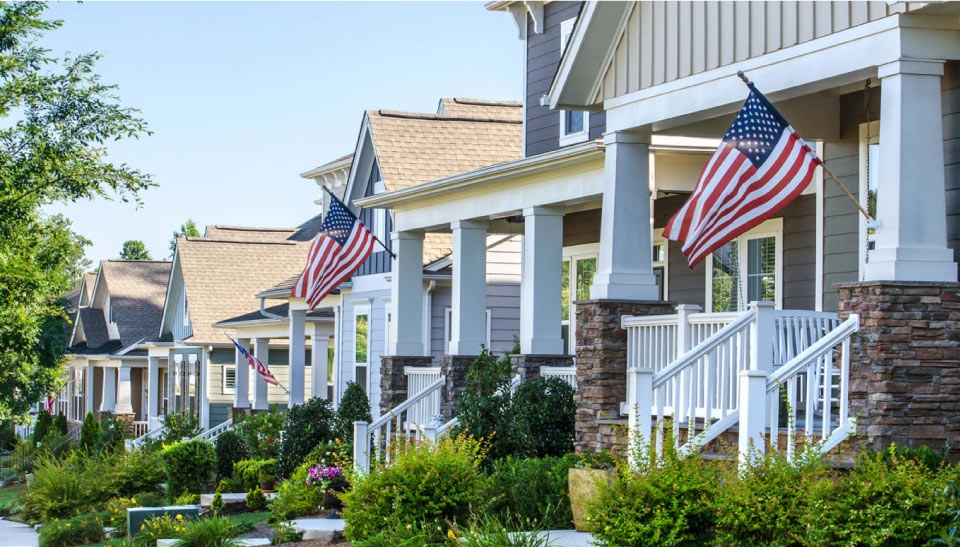
The Town of Fishers offers a variety of housing in different price points from $100,000 to $1,000,000 including single family homes, condominiums, and apartments, in order to attract a wide-ranging population of workers, executives, and families. Over 125 subdivisions provide a choice of housing to meet lifestyle and financial needs.
Median Household Incomes
The Town of Fishers has high levels of educational attainment and median incomes.
Fishers: $75,638
Marion County: $52,693
Hamilton County: $71,026
Noblesville: $61,455
Education Levels
|
|
Number |
Percentage |
| High School Graduate |
2,796 |
11.5 |
| Some College (no degree) |
4,544 |
18.6 |
| Associate Degree |
1,932 |
7.9 |
| Bachelors Degree |
10,851 |
44.5 |
| Graduate of Professional Degree |
3,821 |
15.6 |
| Percentage of High School or Higher |
|
98.2 |
| Percentage of Bachelors Degree or Higher |
|
60.1 |
Fishers, Indiana, formerly known as Fishers Station and originally as Fishers Switch, came into being in June of 1872 when Salathiel Fisher divided his land into Town lots. In those days it was common for new communities to spring up along railroads and Fishers was no exception, hence the early reference to a train station or 'switch'.

The railroad quite naturally drew residents and businesses to the area, the first of which was a gristmill and sawmill located approximately where the Nickel Plate restaurant is today. Fishers is located in Delaware and Fall Creek Townships in southeastern Hamilton County. Most of the early history of Hamilton County centers on Delaware Township, which was acquired from the Indians when Indiana became a state in 1816. Hamilton County was initially divided into only two Townships, White River in the north and Delaware in the south. Federal guidelines were set up for the orderly sale of acquired Indian Territory and the first land rush began.
At the time of the purchase, William Conner was the only white man living in Delaware Township. Operating a trading post, which is now the modern day Conner Prairie Pioneer Museum, Conner's house was connected via Indian trail to Anderson and Connersville and by state road to Fort Wayne. Portions of this road later became present day Allisonville Road. The first official wave of settlers came to the 'southeastern' area in the 1820's.
In 1823, Delaware Township was divided into three townships by adding Clay to the west and Fall Creek to the east. The railroad was constructed in 1851 and eventually extended to Chicago in the early 1870's when Fishers Switch was platted.
Fishers population grew slowly to 388 by the 1960 census when rail shipment declined. The relocation of Indiana highway 37 to the east side of town and the subsequent connection with I-69 insured the future growth of Fishers as a commercial and residential center. The Town of Fishers would soon become a fast growing suburb of Indianapolis. Fall Creek Township became the site of a consolidation of area schools when Hamilton Southeastern High School was formed in the 1960's. The development of Geist reservoir in Fall Creek Township during the 1980's also added to the area's growth. With the continued extension of sanitary sewers eastward under I-69 and with stable interest rates, the population increased from 7,187 in 1990 to 37,835 by March of 2000, 52,390 in 2003, and is estimated to be over 60,000 by the end of 2006.
Time Zone Time Zone
Eastern (with DST adjustments in the Spring and Fall)
 Fishers Town Flag
The Town of Fishers Flag is comprised of three colors: "Kelly" Green, "Holland" Blue, and "Weaver" White. The green represents the Town's green fields. The blue represents the skies, White River, and Geist Reservoir. The white represents the Town's crossroads: 116th Street and Interstate 69. The angled bar moving upward to the right reflects the Town's growth, and the two gold triangles represent balances that symbolize the Town's balanced and fair approach to governance.
Population Information (2003):
Population: 52,390
Median age:31.0 years
Racial Composition
White (non-Hispanic): 88.5%
Hispanic: 2.6%
Black or African American: 4.6%
American Indian or Alaska Native: 0.1%
Asian: 4.1%
Other: 1.2%
More than one race: 1.4%
Household Information (2003):
Average household size: 2.75
Average family size: 3.24
Total number of housing units: 20,611
Occupied housing units: 18,996
Vacant housing units: 1,615
Income Information (2000):
Median household income (in dollars): 75,638
Median family income (in dollars): 81,971
Per capita income (in dollars): 31,891
Fishers Timeline
1802: William Conner becomes the first permanent white settler in what is now present-day Fishers, Ind., and builds a log cabin and a trading post along the banks of the White River. The land upon which he settled eventually becomes Conner Prairie, which is today located within the Fishers town limits, and is one of the nation's most respected living history museums.
1816: President Madison approves Indiana's admission into the union as the 19th state.
1818: More white settlers come to the area after the Delaware Indians cede all their claims to lands in Indiana and Ohio to the United States government through the Treaty of St. Mary's.
1820: The State of Indiana legislature votes to designate a new state capital (which, in 1820, was Corydon, Ind.), and appoints a commission charged with that task. The commission meets at William Conner's cabin, and eventually recommends Indianapolis as the site for the State's new capital. John Finch establishes a horse-powered grinding mill and blacksmith shop, and the area's first school is established in a small cabin.
1821: The area's first water mill is constructed.
1822: Land in Delaware Township is surveyed and offered for sale as homesteads. John Conner, founder of Connersville, Ind., and brother of William Conner, purchases land.
1823: Hamilton County is chartered by the Indiana General Assembly. Delaware Township created.
1824: William Conner aids in serving justice in the wake of the Fall Creek Massacre that resulted in the murder of eight Indians. Five white men were tried for the crime; four were convicted and sentenced to death. The event marks the first time in U.S. history that white men are hanged for killing Indians.
1826: Ambassador House is built, and is later owned by Addison and India Harris. Addison Harrison is eventually appointed ambassador to the Austro-Hungarian Empire by U.S. President William McKinley. Today, Ambassador House sits on the grounds of Fishers' Heritage Park at White River, and plans for its restoration are being developed by Fishers' Historic Preservation Committee.
1827: The township's first log cabin school is erected.
1832: A "subscription," or private, school is established in Delaware Township.
1840: Threshing machines are introduced to the area.
1849: Construction begins on the Peru & Indianapolis Railroad.
1851: New Britton is platted near present-day 131st and Lantern Road.
1855: William Conner dies.
1861: The first soldiers from the area report for Civil War duty at Camp Morton in Indianapolis.
1872: Fisher's Switch, also known as Fishers Station, is platted by Salathial Fisher at the present-day 116th Street and the railroad. Fisher divides the land into lots; First post office established.
1891: Indiana's General Assembly incorporates Fisher's Station.
1893: Post office drops the apostrophe from the name Fishers Switch.
1908: Post office changes its name to Fishers by dropping "Switch."
1927: Hamilton County Historical Society places a marker on the site of the William Conner farm.
1934: Eli Lilly, grandson of Col. Eli Lilly, founder of what is today Indianapolis-based pharmaceutical giant Eli Lilly and Company, purchases William Conner's former land and begins restoring the house.
1943: The Indianapolis Water Company constructs Geist Reservoir.
1961:Per township referendums, the City of Noblesville provides planning services for Delaware and Fall Creek Townships and approves residential zoning for most of the undeveloped area in the two townships.
1963: Fishers High School graduates 24. Population is about 350.
1964: Eli Lilly asks Earlham College to oversee Conner Prairie.
1964: Hamilton Southeastern Schools is created as a part of Indiana's school district consolidation initiative.
1972: Fishers adopts a zoning and master plan; Fishers' population is about 700.
1973: Interstate 69, which dissects Fishers, is completed.
1975: HSE High School graduates 110 students.
1976: HSE Middle School opens.
1980: Fishers' population is about 2,000.
1988: The First annual Freedom Festival is held. Fishers' population is about 7,000.
1990: Fishers' population is about 7,200.
1992: The Thomas A. Weaver Municipal Complex opens as Fishers' civic and government center. The cam
pus-like complex is home to Fishers Town Hall, the Police and Fire Department headquarter buildings, the Fishers Post Office, the Hamilton County Convention and Visitor's Bureau and the Fishers Chamber of Commerce. Eventually, a library and a Bureau of Motor Vehicles are added.
1998: Fishers voters overwhelmingly reject a referendum to change form of government from town to city.
1999: Fishers Freedom Festival is named "Best Small Town Festival" in north central Indiana.
2000: Fishers' population grows to almost 38,000.
2003: Town of Fishers officials request a special census from the U.S. Census Bureau to accurately measure anticipated rapid population growth since 2000.
2004: Fishers wraps up its special census, and the Town's population is 52,390, which represents a 38 percent increase from the
 last census in 2000. For detailed information about the Town's special census, click
here.
2005: In July of 2005, the Town of Fishers was named one of the best places to live in the country. Money Magazine unveiled its annual ranking of "Best Places to Live in the United States" and rated Fishers as twenty-fourth best. Fishers ranked higher than any town or city in Indiana, and was one of only two jurisdictions in the state to crack the magazine's Top 100.
2005: Upon completion of negotiations dating back to 2003, Conner Prairie Living History Museum formally split from Earlham College.
2006: Relocate-America.com, a Web site that assists consumers in finding communities that best fit their needs, names Fishers among "America's Top 100 Places to Live in 2006."
|